Star and Planet 3
Star and Planets 1Shooting Star Asset

HVAC Pricing In Kansas City

Real numbers for furnace and AC installs, heat pumps, mini-splits, and the repairs that keep them running — across Kansas City, Overland Park, Olathe, Lee’s Summit, Liberty and the rest of the metro. Schedule online and we will put an exact price on your project, free.

Kansas City Authorized HVAC Contractor
Luna Heating and Cooling Lennox logo IconGoodman authorized HVAC dealer logo - Luna Heating and Cooling Kansas City

What A New HVAC System Costs In Kansas City

$5,000 – $12,500

Typical installed cost of a full air conditioner and furnace replacement for a Kansas City home.

Kansas City asks a lot of a comfort system. Summers run hot and humid, winters drop well below freezing, and the shoulder seasons can swing thirty degrees in a single day. That is why most homes here run a matched pair — a gas furnace for the cold months and a central air conditioner for the humid ones — and why correct sizing and a clean installation matter more here than they do in milder markets.

For a typical 2,100 square foot metro home, a full system replacement usually lands between $5,000 and $12,500 installed. Replacing only the furnace or only the air conditioner costs less. Adding ductwork, relocating equipment, or stepping up to variable-speed, high-efficiency equipment moves the number higher.

A replacement is not just new equipment dropped into an old setup. It is a system: the furnace or air handler, the outdoor unit, the coil, the line set, the plenum and duct connections, the electrical, the thermostat, and the permit. When a quote comes in unusually low, one of those pieces is usually missing — and it is normally the part that decides whether the system lasts ten years or twenty.

Kansas City HVAC Pricing By System

These are installed price ranges for the Kansas City metro — equipment, labor, materials and permit included. Where your project lands inside a range depends on the size of your home, the efficiency tier you choose, and what the installation itself requires.

System Or Service
Installed Price Range
Full system replacement (AC + furnace)
$5,000 – $12,500
The most common project in KC. Replacing both at once saves a second install charge and keeps the pair properly matched.
Gas furnace replacement
$3,800 – $10,000
80% AFUE single-stage at the low end; 96%+ modulating with a variable-speed blower at the high end.
Central air conditioner replacement
$3,300 – $7,900
Most KC homes need 3.5 to 4.5 tons. The SEER2 rating is the biggest single lever on price.
Air-source heat pump
$4,500 – $8,800
Usually paired with a gas furnace as a dual-fuel system here, so the heat pump carries the mild months and the furnace takes over in a hard freeze.
Ductless mini-split, single zone
$2,500 – $6,000
The fix for a bonus room, sunroom, garage, addition or finished basement the main system never reaches.
Ductless mini-split, multi-zone
$4,500 – $15,000
Two zones at the low end, four or five at the high end. Each added indoor head adds equipment and labor.
Air handler replacement
$1,800 – $4,200
Single-speed motors sit at the bottom of the range, variable-speed ECM motors at the top.
Evaporator coil replacement
$900 – $2,250
Coil style, tonnage and access all matter. An attic or tight crawlspace install runs higher.
Ductwork replacement or redesign
$2,000 – $5,000
Priced by linear foot and material. Older KC homes with undersized returns often need this to get the comfort they paid for.
Smart thermostat, installed
$150 – $500
Whether a C-wire already exists is usually what decides the price.
Whole-home humidifier
$400 – $1,350
Bypass units at the low end, steam units at the high end. A real help through a dry KC January.
In-duct UV light or air purification
$750 – $3,500
Single-lamp coil treatment through full whole-home purification with media filtration.
These are Kansas City market ranges, not quotes. Equipment sizing, home layout, duct condition, electrical work and permit fees all move the final number. The only way to know your price is to have someone look at your home — and that visit is free.

What Determines Your Install Price

Two houses on the same street can get very different quotes for what sounds like the same job. Five variables account for almost all of the difference.

01 — System Size

Capacity is measured in tons for cooling and BTUs for heating, and it is set by a load calculation: square footage, insulation, window area, ceiling height and orientation. Most KC homes land between 3.5 and 4.5 tons. Oversizing is the most common mistake we find, and it shows up as short cycling, humidity that never drops, and a system that wears out early.

02 — Efficiency Rating

SEER2 on the cooling side and AFUE on the heating side. Standard-efficiency equipment costs the least up front. High-efficiency equipment costs more to install and less to run, and it is usually what qualifies for utility rebates. The right tier depends on how long you plan to stay in the house.

03 — Duct Condition

Ductwork is the part nobody quotes and everybody feels. Undersized returns, leaky joints and crushed flex runs hold back even the best equipment. Sealing and minor repairs may add a few hundred dollars; a redesign can add several thousand. We tell you which one you are looking at before you sign anything.

04 — Equipment Tier

Single-stage equipment runs at full blast or not at all. Two-stage and variable-speed systems modulate, which means quieter operation, steadier temperatures and much better humidity control through a KC August. That capability is real, and it costs more. We quote the tiers side by side so the tradeoff is yours.

05 — Install Complexity

A straight swap in an open basement is the cheapest install there is. An attic air handler, a tight crawlspace, a long line set, an electrical panel that needs work, a gas line that needs resizing, or equipment that has to be relocated all add labor hours. So does removing and disposing of the old system.

HVAC Cost By System Type

Picking equipment is not only about the sticker. Each type carries a different up-front cost, a different operating cost, and a different fit for a Kansas City home. Here is how the four common paths compare.

Gas Furnace Cost

A gas furnace is still the workhorse of heating in Kansas City, and for good reason — natural gas is widely available here and it moves a lot of heat on the coldest nights. Installed, a replacement typically runs $3,800 to $10,000.

The spread is almost entirely efficiency and staging. An 80% AFUE single-stage furnace is the budget option and it works, but roughly a fifth of the fuel goes up the flue. A 96% or higher condensing furnace with a variable-speed blower costs more to install — it also needs different venting — and it runs longer at lower speeds, which is what actually makes a house feel evenly heated instead of hot-then-cold. We also look at the flue, the gas line and the combustion air supply on every quote, because a furnace that cannot breathe correctly is a safety issue, not just an efficiency one.

Central Air Conditioner Cost

Central AC replacement in the metro generally lands between $3,300 and $7,900 installed, with most homes needing 3.5 to 4.5 tons.

SEER2 is the biggest lever. A standard-efficiency unit costs the least and cools fine; higher SEER2 equipment costs more up front, drops the summer bill, and is what qualifies for Evergy rebates. In a humid market like ours, the quieter argument for stepping up a tier is dehumidification — a two-stage or variable-speed system runs longer at lower capacity and pulls far more moisture out of the air than a single-stage unit that blasts and shuts off. That is the difference between 74 degrees that feels cool and 74 degrees that feels clammy.

Heat Pump Cost

An air-source heat pump runs $4,500 to $8,800 installed. It both heats and cools, moving heat rather than burning fuel, which makes it very efficient through the mild half of the year.

In Kansas City the smart configuration is usually dual fuel: a heat pump paired with a gas furnace. The heat pump handles fall, spring and mild winter days at low operating cost, and the furnace takes over when temperatures drop into the range where a heat pump loses efficiency. It costs more than a straight AC-and-furnace pair, but it can meaningfully lower what you spend across a full year, and heat pumps carry the largest Evergy rebates of any equipment on the list.

Ductless Mini-Split Cost

A single-zone mini-split installs for $2,500 to $6,000; a multi-zone system runs $4,500 to $15,000 depending on how many indoor heads it feeds.

Mini-splits solve a specific problem well: the room the main system never gets right. Bonus rooms over garages, finished basements, sunrooms, additions, converted attics, home offices and detached garages are all classic candidates. Because they need no ductwork, they are also the cheapest way to add real heating and cooling to a space that has none.

The Most Affordable Path

The lowest-cost route to a reliable system is a standard-efficiency furnace and air conditioner installed as a matched pair. Affordable is not the same as cheap: a properly sized, properly installed standard-efficiency system will outlast a premium system that was oversized and rushed. What you give up at this tier is operating cost, humidity control and quiet — not reliability.

The Premium Path

At the top of the range are variable-speed, high-efficiency and dual-fuel systems, often paired with upgraded filtration, a whole-home humidifier and a smart thermostat. They cost the most to install and deliver the most: the lowest bills, the steadiest temperatures, the best humidity control and the quietest operation. For a homeowner staying put for ten or more years, the math usually works. For someone planning to sell in two, it usually does not — and we will tell you so.

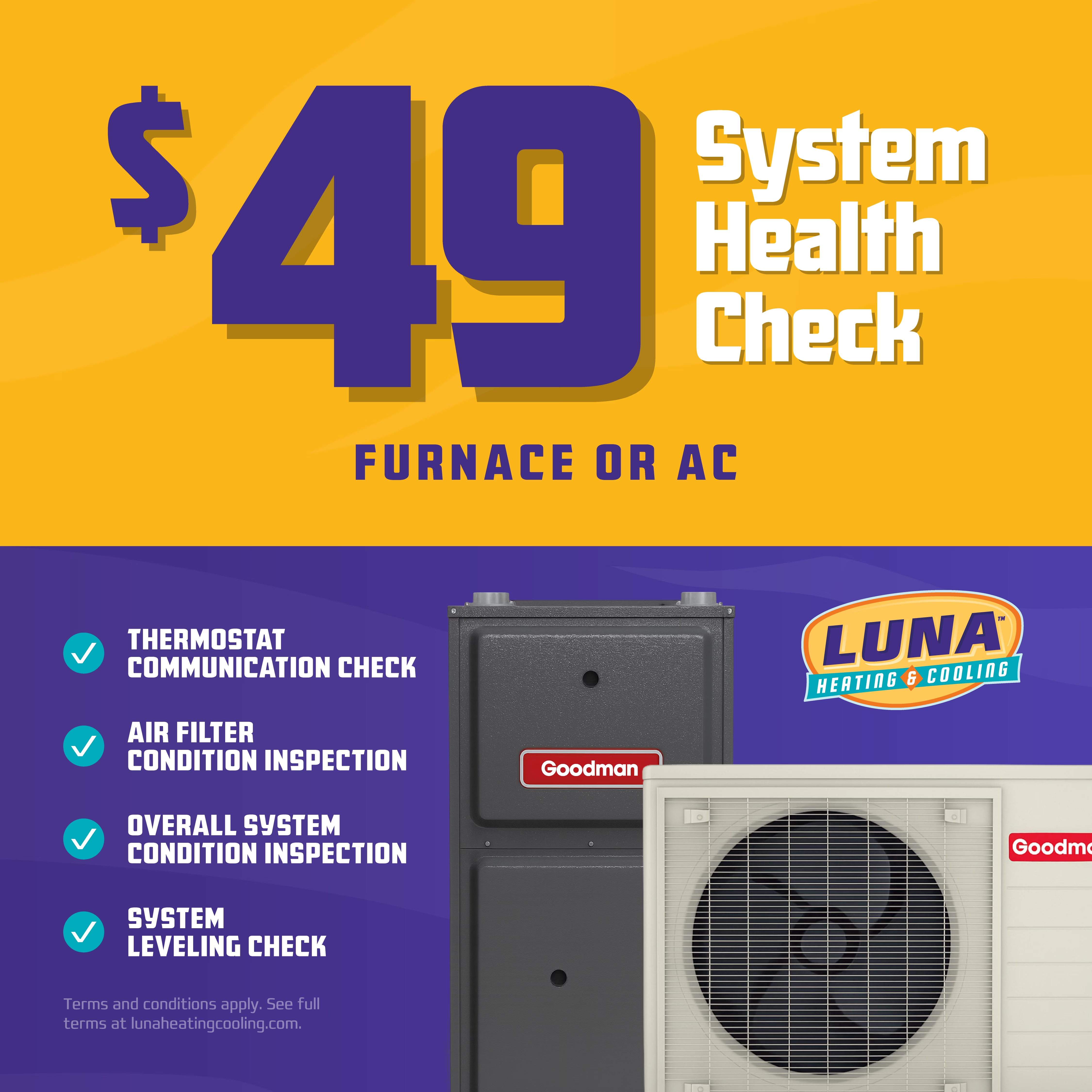
0% Interest HVAC System Financing

Air Conditioner

Furnace

0% Interest HVAC System Financing

Limited-Time Offer

Buy AC Get Furnace Free

Air Conditioner

Furnace

Buy AC Get Furnace Free

Limited-Time Offer

Does The Season Change HVAC Pricing?

Season affects your wait more than it affects your price. The first ninety-degree stretch in June and the first hard freeze in December are when every HVAC company in the metro gets busy at once, and that is also when systems fail — equipment tends to break the day it is asked to work hardest.

If you have a choice, spring and fall are the easiest times to replace a system. Schedules are open, you are not making a decision under pressure in a ninety-degree house, and there is time to compare options properly. If you do not have a choice, we run emergency service and we will get you covered.

Repairs

Most repairs are diagnosed and completed in a single visit. Same-day or next-day service across the KC metro, with emergency availability when the heat or the cooling is out entirely.

Standard Replacement

A straight furnace and AC changeout is normally a one-day install. We can often be in the next day once the equipment is confirmed.

Complex Projects

Ductwork, equipment relocation, electrical upgrades or multi-zone mini-split systems typically take two to three days, and peak season can extend that.

How Much Does HVAC Repair Cost?

$95

Luna diagnostic fee. A technician finds the actual cause, explains it in plain language, and gives you the repair price before any work begins.

Most repairs in the metro land between $150 and $800. A failed capacitor on a Saturday afternoon and a cracked heat exchanger are both “my system is not working,” but they are not remotely the same bill, so the honest answer to what a repair costs starts with a diagnosis.

We inspect before we quote. That means checking the equipment, the electrical connections, refrigerant charge, airflow and duct static, and the thermostat — not just the part that announced itself. A blower motor that burns out because a filter has been choked for two years is going to burn out again if nobody mentions the filter. Fixing the cause is cheaper than fixing the symptom twice.

Waiting is what turns a small repair into a large one. A refrigerant leak left alone runs the compressor low on charge until the compressor fails. A weak igniter left alone becomes a no-heat call at eleven at night in January. If something sounds, smells or feels wrong, the cheapest moment to deal with it is now.

Common Repair
Typical Cost
Air Conditioning
Capacitor replacement
$150 – $400
The most common AC failure there is, and one of the least expensive. Symptom: the outdoor fan hums but will not start.
Contactor or relay replacement
$100 – $450
Pitted contacts stop the outdoor unit from engaging even though the thermostat is calling for cooling.
Condenser fan motor
$300 – $800
A dead outdoor fan will overheat the compressor quickly, so this one should not wait.
Refrigerant leak repair and recharge
$200 – $1,500
Cost depends entirely on where the leak is. Older R-22 systems cost far more to recharge than modern refrigerants.
Evaporator coil replacement
$900 – $2,500
On a system past ten years old this is often the point where replacement becomes the better value.
Compressor replacement
$1,300 – $3,000
Much cheaper if the compressor is still under manufacturer warranty and you are paying labor only.
Heating
Hot surface igniter
$150 – $500
A classic no-heat call. The furnace tries to start, fails, and locks out.
Flame sensor clean or replace
$150 – $250
Often the fix when a furnace lights, runs briefly, then shuts down again and again.
Blower motor
$300 – $1,200
Standard PSC motors sit at the low end; variable-speed ECM motors at the high end.
Control board
$200 – $600
Boards for older or premium models can be harder to source, which moves the price.
Gas valve
$200 – $600
Varies with valve type and how many stages the furnace runs.
Heat exchanger replacement
$1,000 – $3,000
A cracked heat exchanger is a carbon monoxide risk. On an older furnace, replacement is almost always the better call.
After-hours and emergency service
Premium Rate
Nights, weekends and holidays carry a higher labor rate across the industry. We tell you the number before we dispatch.
Repair prices assume standard access and parts that are commercially available. If your equipment is still under manufacturer warranty, bring it up — on many repairs it means you pay labor only.

Four Things That Move A Repair Bill

01 — Which Part Failed

A capacitor is a part-and-labor call measured in minutes. A compressor or a heat exchanger is a major component that takes hours and carries real material cost. Most of the difference between a $200 repair and a $2,000 repair is decided the moment the technician identifies the failure.

02 — Warranty Status

Manufacturer parts warranties commonly run five to ten years, and longer on registered equipment. If your compressor, coil or heat exchanger is still covered, you pay for labor and refrigerant instead of the part — frequently the difference between a repair that makes sense and one that does not.

03 — Access And Age

An attic air handler in July, a crawlspace furnace, or a unit boxed in by a finished basement all add labor time. Older systems add another wrinkle: discontinued parts take longer to source, and some are no longer made at all.

04 — When You Call

Scheduled daytime service is the standard rate. Nights, weekends and holidays carry a premium across the industry. If the situation can safely wait until morning we will say so — and if it cannot, we will come.

The Two Repairs Homeowners Ask About Most

Refrigerant Leak Repair

Repairing a leak and recharging the system runs $200 to $1,500, and the spread comes down to where the leak is. A loose fitting or a leaking valve core is a short job. A pinhole in an evaporator coil or a failed line set buried in a wall is a different project entirely, and on older equipment it can cost more than the system is worth.

Here is the part that matters: an air conditioner does not consume refrigerant. If it is low, it is leaking. Topping off a leaking system without finding the leak means paying for refrigerant twice and running the compressor undercharged in the meantime, which is how a $400 repair turns into a $2,500 one. We locate the leak, tell you what it costs to fix properly, and give you an honest read on whether that fix is worth making on your system.

No Heat Or No Cooling At All

A total loss of heating or cooling is the call we treat with the most urgency, because Kansas City weather does not negotiate. A hundred-degree stretch in July is dangerous for older adults, small children and pets, and a subzero night in January puts your pipes at risk.

Sometimes the cause is small — a tripped breaker, a clogged condensate switch, a failed igniter, a thermostat that lost power. Sometimes it is a failed compressor or a cracked heat exchanger. Either way, we diagnose it, we tell you what the repair costs and what a replacement costs, and if the honest answer is that repairing the system is throwing good money after bad, we will say that too.

Repair Or Replace? How To Decide

A repair on a seven-year-old system is almost always the right call. A repair on a seventeen-year-old system usually is not. In between, three rules of thumb do most of the work.

The $5,000 Rule

Multiply the age of the system by the repair quote. Over $5,000, lean toward replacement; under it, lean toward repair. A twelve-year-old air conditioner with a $450 repair comes to $5,400 — a signal to start pricing a replacement.

The 50% Rule

If the repair costs half or more of what a new system would cost installed, replace it. This one carries the most weight on equipment past ten years, where the next failure is rarely far behind.

The Age Test

Most systems run twelve to eighteen years in this climate. Under seven, repair. Past fifteen, replacement usually wins even when the math is close, because you are buying reliability rather than another season.

The Signals That Point To Replacement

Repeat repairs in a single season. Energy bills climbing while nothing else changed. Rooms that never get comfortable no matter what the thermostat says. A system that uses R-22, which is no longer produced and expensive to recharge. Rust, corrosion or a cracked heat exchanger. Any one of these on its own is worth a conversation; two or three together and a replacement is nearly always the cheaper decision over the next five years.

Our job on that visit is to give you the numbers for both paths and let you choose. We are not going to condemn a system that has good life left in it, and we are not going to sell you a fourth repair on a system that should have been replaced last year.

Ways To Bring The Price Down

The sticker on a new system is rarely what a homeowner actually pays out of pocket in month one. Four things change that number.

Financing

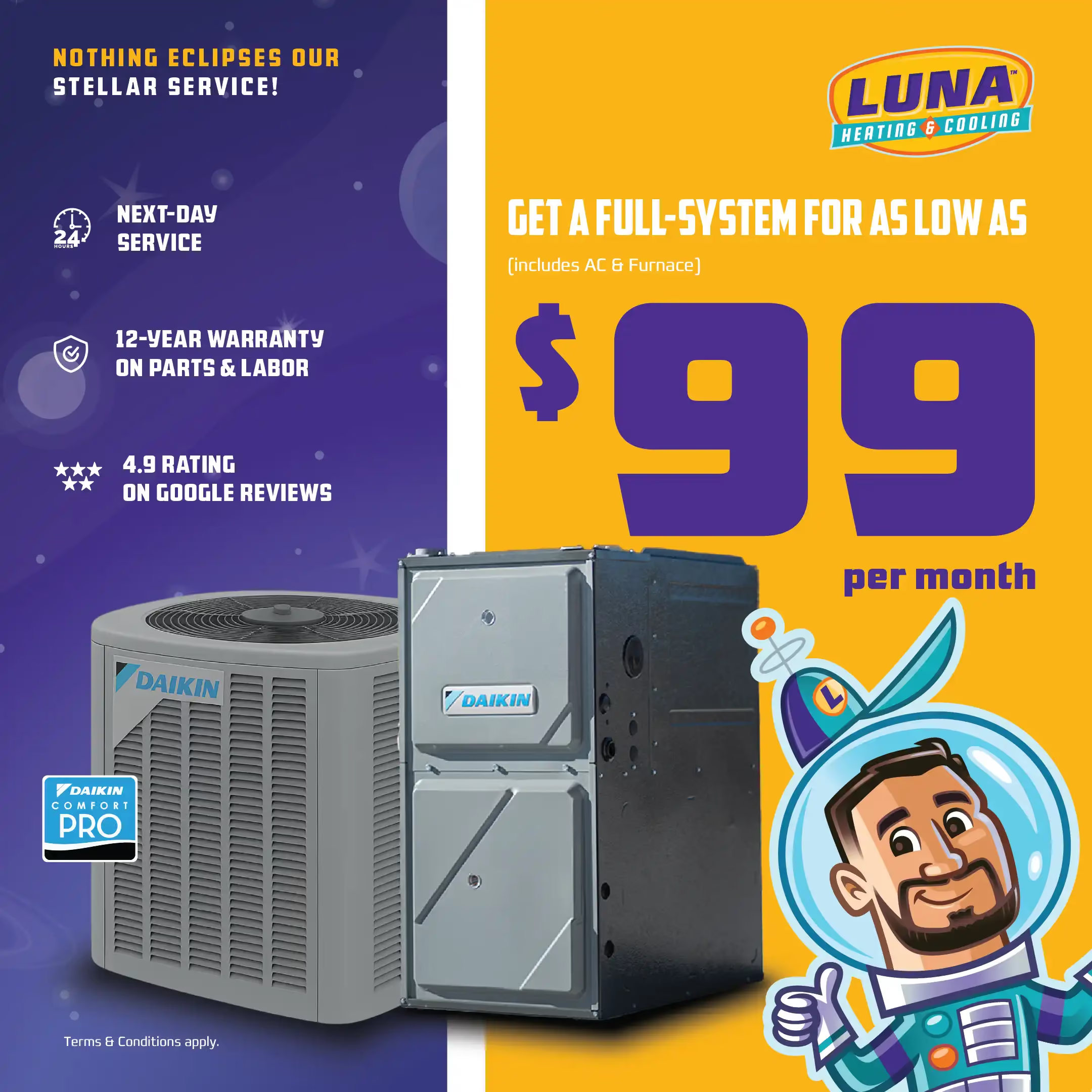
Approved financing on new systems starts around $99 a month, with 0% interest options available on qualifying installs. Applying is a soft credit inquiry, so checking what you qualify for does not affect your score.

Utility Rebates

Evergy pays rebates on qualifying high-efficiency equipment — currently up to $600 on central air conditioners, up to $1,000 on air-source heat pumps, and rebates on mini-splits and duct sealing. Amounts and eligibility vary by tier and service territory, and we handle the paperwork.

Luna Series Packages

Instead of pricing every component separately, our Luna Series packages bundle the system, the thermostat, air quality accessories and the warranty into one number, from Economy through Diamond. It is the simplest way to compare good, better and best.

Stellar Protection Plan

From $19 a month, the plan covers seasonal tune-ups on both systems plus discounts on repairs. Maintained equipment fails less and lasts longer, which is the cheapest money in HVAC.

Rebate programs and financing terms change. We will confirm what is available for your address and equipment at the time of your estimate, so the number you see is the number that applies to you.

Get An Exact Number For Your Home

Ranges are useful. A real quote is better. Schedule online and a Luna technician will size your system correctly, look at your ductwork and electrical, walk you through your options side by side, and put a firm price in writing. Free, and no pressure.

Schedule YoUR
Service Appointment

Need reliable HVAC service? Fill out the form below, and we’ll be in touch soon to schedule your appointment. With Luna, your comfort is always in orbit!

What would you like to schedule? (Select That Apply)

Thank you! Your submission has been received!
Oops! Something went wrong while submitting the form.
Luna Heating and Cooling Van Image

What's Happening At Knowledge Galaxy?

Explore Luna’s universe of HVAC tips, product insights, and real-life stories. From equipment guides to DIY hacks and customer spotlights—your path to stellar comfort starts here.

Need Our Services?
We'll Be There AT LightSpeed

Schedule Online

Purple Cross Mark Emoticon

Contact Us

Purple Cross Mark Emoticon