
Rental Property HVAC Services in Kansas City for Landlords
Last Updated
A rental property's furnace and air conditioner work harder than almost any other system in the building, and they do it for people who never bought them. That combination is why HVAC shows up on nearly every landlord's list of recurring headaches. In the Kansas City metro, systems swing from humid summer cooling loads to hard winter heating stretches, and one failure can turn into a stream of tenant messages, an emergency service call, and a repair bill that lands at the worst possible moment. A little planning keeps those moments rare and keeps good tenants in place.
Why HVAC Deserves Its Own Line in the Budget
Every rental property has a handful of systems that generate calls: plumbing, appliances, roofing, and heating and cooling. HVAC is the one that combines high repair cost with immediate habitability concerns. A tenant can live with a slow drain for a week. They cannot reasonably live without heat in January or cooling in an August heat wave, and they will let you know quickly when the system stops cooperating.
Kansas City landlords talking shop online tend to describe the same wish list: an honest, reasonably priced technician who can take on multiple properties and answer the phone when something breaks. That is a reasonable baseline. What separates a smooth year from a chaotic one is whether the work happens on a schedule you control or on a schedule the equipment chooses for you.
Think of the HVAC system as the life support module of the property. Everything else can wait a few days in a holding pattern. This one usually cannot.
Landlord and Tenant Responsibilities: Where the Line Usually Falls
State law sets the floor for habitability, and the lease sets many of the details on top of it. Rules differ between Kansas and Missouri, and they can hinge on factors like the length of the tenancy, the type of property, and what the lease actually says. Nothing here replaces the statute or a conversation with a landlord-tenant attorney. What follows is how responsibility is commonly divided in practice.
Because the Kansas and Missouri rules around repair timelines are not settled by a single national standard, verify current requirements with the relevant state statute or your attorney before you build a policy around them. A lease clause that clearly states who filters, who pays, and who calls whom is worth more than any assumption.
Preventive Maintenance Is the Cheapest Repair You Will Ever Pay For
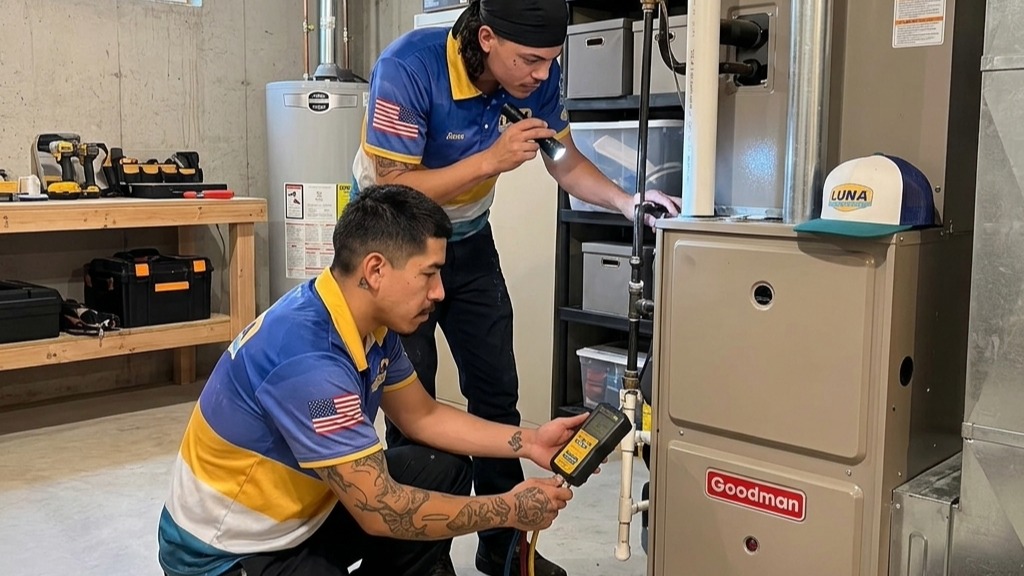
Landlords in the Kansas City area regularly post about the same complaints: a frozen refrigerant line on the central air, water pooling in the furnace cabinet, a system that quit on the hottest weekend of the year. Those problems rarely appear out of nowhere. They build quietly over months of restricted airflow, dirty coils, clogged condensate drains, and worn electrical connections.
A seasonal tune-up catches those conditions while they are still cheap. Schedule one before the cooling season and one before the heating season, and treat the visit as an inspection report as much as a maintenance task.
- What a Rental Property Tune-Up Should Cover
- Airflow checks across the system, including the blower and filter condition
- Refrigerant charge and line condition on the cooling side
- Condensate drain and pan, a common source of water damage in rental units
- Electrical connections, capacitors, and contactors
- Furnace ignition, flame sensor, and heat exchanger inspection
- A written summary you can file with the property records
Documentation That Protects You at Turnover
Service records do quiet work at move-out. When a deposit dispute comes up over a system that failed mid-lease, an invoice history showing regular professional maintenance and a clean inspection months earlier is far more useful than a memory of a phone call. Keep invoices, technician notes, and filter-change reminders in the same folder as the lease and the move-in checklist.
Handling Emergency Calls Without Losing a Tenant
The difference between a stressful night and a disaster is usually preparation. Give tenants one clear number to call, define in the lease what counts as an emergency, and decide in advance who you want dispatched. No heat during a cold snap and no cooling during extreme heat are the classic emergencies. A noisy outdoor unit or a thermostat that reads a few degrees off is not.
Have a plan for bridging the gap. Temporary heating and cooling equipment is available for rent in the Kansas City area, including portable air conditioners, temporary heaters, and dehumidification units. For a larger building or a commercial tenant, that kind of short-term equipment can keep a space usable while a permanent repair is scheduled.
Speed matters for more than comfort. A tenant who spends a weekend without an answer starts browsing listings on Monday.
Repair or Replace: Reading the Signals on an Aging System
At some point every landlord faces the same math. The system is old, the repair list is growing, and each new service call buys less time than the last one. Frequent repairs, parts that are getting hard to source, and rising utility complaints from tenants all point the same direction.
Durability matters more in rentals than in owner-occupied homes because the equipment absorbs more use and less attention. When you do replace, ask about equipment built for heavy duty cycles, and ask what the warranty covers and who honors it. A long warranty on parts and labor is worth real money across a portfolio, because it caps the cost of the failures you cannot predict.
Choosing an HVAC Partner for Multiple Properties
A single-family home can get by with a contractor chosen in a panic. A portfolio cannot. What you want is a company that understands rental timelines and does not treat your properties as one-off jobs.
Transparent diagnostic pricing, so you know the cost of the visit before the technician arrives
A clear warranty on parts and labor
Reliable scheduling, including next-day availability for non-emergency work
One point of contact for multiple addresses and one consolidated invoice trail
Straight answers about repair versus replacement, backed by what the technician actually found
Plenty of companies in the metro advertise these things. Ask for specifics. Luna Heating and Cooling, for example, publishes a $95 diagnostic fee and a 10-year warranty, which gives landlords two concrete numbers to compare against other bids. Property managers across Kansas City coordinate maintenance across trades, and the contractors who make that coordination easy tend to keep the account.
Financing Options for Rental Property HVAC Work
Replacement costs rarely arrive at a convenient time, and a portfolio has more than one system aging at once. Financing spreads the hit instead of draining reserves in a single month. Luna offers promotional financing options, and equipment can be bundled into package tiers ranging from the Economy level up to the Diamond level, which pairs equipment with smart thermostats that make remote management easier for out-of-state owners.
Financing terms vary, approval is not guaranteed, and the details matter. Ask for the full terms in writing before you sign, and compare the total cost of the financed option against paying outright.
Short-Term Rentals Need a Slightly Different Plan
Airbnb and vacation rentals compress the maintenance window. Guests book back to back, which means there is no slow Tuesday to schedule a tune-up. Get seasonal service done during the shoulder months, keep the filter schedule with your cleaning crew rather than the guest, and use a smart thermostat so you can adjust settings remotely when a unit sits empty between stays.
Short-stay properties also punish deferred maintenance faster. A guest who checks into a hot unit leaves a review that follows the listing for months. Treat the HVAC system as part of the guest experience, not just infrastructure.
Frequently Asked Questions
Who is responsible for HVAC repairs in a Kansas City rental property?
In most leases, the landlord handles repairs to major components and the tenant handles filter changes and reasonable thermostat use. Kansas and Missouri rules on repair timelines are not identical, and the lease adds its own terms. Check the current state statute or ask a landlord-tenant attorney before relying on any assumption.
How often should a rental property's HVAC system be serviced?
Twice a year is a common standard: once before the cooling season and once before the heating season. That schedule catches small problems like a clogged condensate drain or a weak capacitor before they become emergency calls. Units in heavy use, or in short-term rentals with constant turnover, may benefit from closer attention.
What counts as an HVAC emergency for a tenant?
No heat during cold weather and no cooling during extreme heat are the usual emergencies, along with any sign of a gas smell or electrical burning. A noisy unit, a thermostat that runs a few degrees off, or a weak airflow complaint can normally wait for a scheduled visit. Spell this out in the lease.
Can landlords finance HVAC replacement for a rental property?
Yes, promotional financing is commonly available, including 0% APR options from some Kansas City contractors. Approval depends on credit and the lender's terms, and the specifics vary. Request the full agreement in writing and compare the financed total against paying for the project outright.
Do tenants pay for AC repairs?
Typically not for normal wear and tear, which falls to the owner. Tenants may owe for damage caused by neglect, such as running the system with a clogged filter until the compressor fails. The lease should define what counts as neglect and how those costs are assessed, so there is no argument later.
