Heat Pump vs. Furnace: Which Is Better for Kansas City?
Last Updated
TL;DR
The short version
- A furnace burns gas to make heat. A heat pump uses electricity to move heat, and it cools your home in summer too.
- Cold-climate heat pumps keep working well below freezing, and typical Kansas City winter nights sit in the 20s.
- Furnaces still win on the hottest supply air and on steady output during rare subzero cold snaps.
- Dual fuel pairs a heat pump with a gas furnace so each one runs when it is cheapest and most comfortable.
- The federal 25C tax credit ended for equipment installed after 2025, so check local utility rebates instead.
For most Kansas City homes, both systems work. A heat pump is the more efficient choice for a typical KC winter and it cools your home in summer, while a gas furnace delivers hotter air and steady output on the coldest nights. Many homeowners get the best of both with a dual-fuel system.
This guide breaks down how each system heats, how they handle local winters, what drives running costs, and how to decide which one fits your home.
What is the difference between a heat pump and a furnace?
A furnace makes heat and a heat pump moves it. A gas furnace burns natural gas, warms the air passing over a heat exchanger, and blows that air through your ducts.
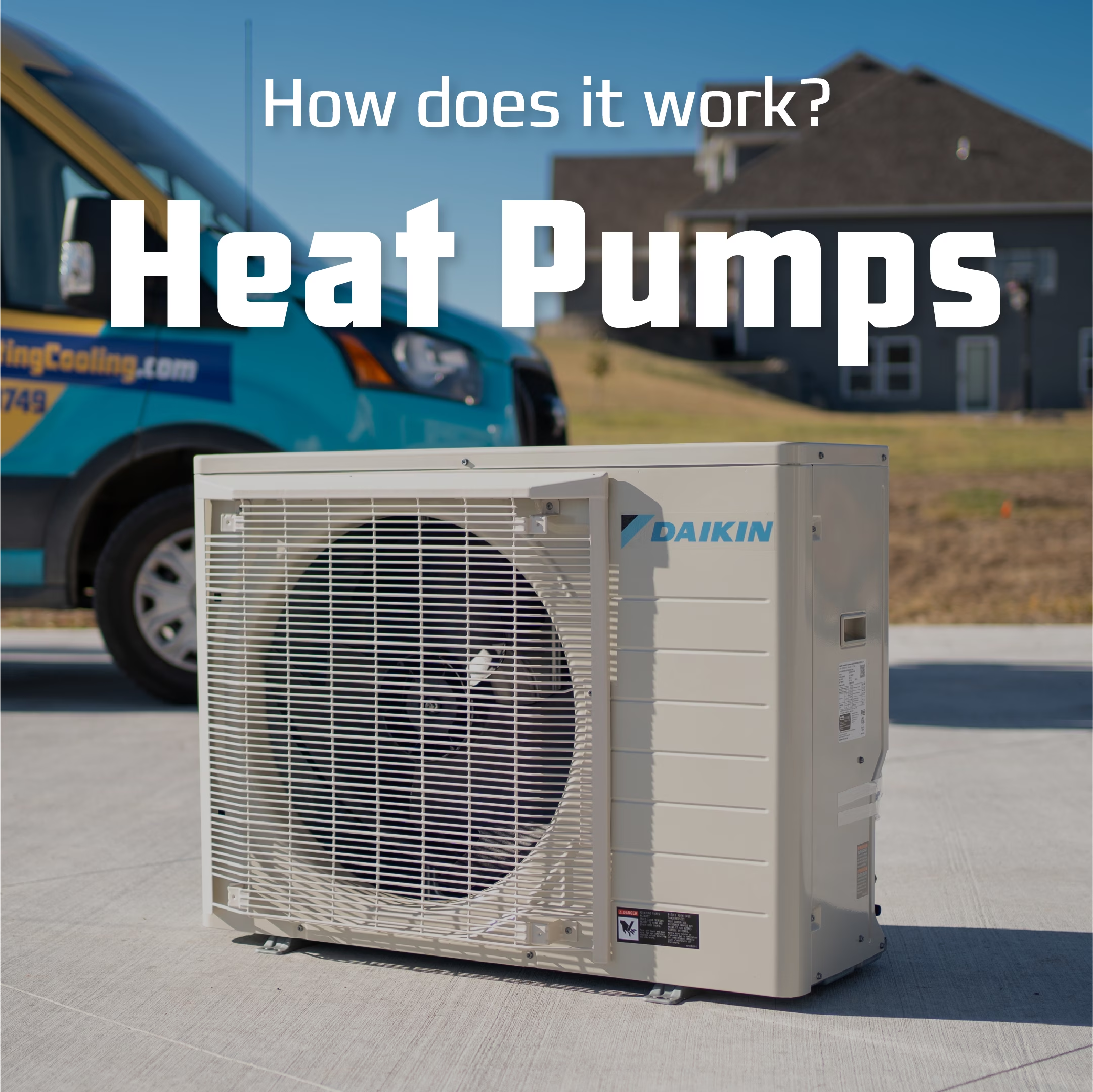
A heat pump works a lot like your refrigerator. The U.S. Department of Energy explains that heat pumps transfer heat rather than generate it, which is why they use so much less energy. In winter, a heat pump pulls heat from the outdoor air and brings it inside. In summer, it reverses and pulls heat out of your home, doing the job of an air conditioner.
That second point matters. A heat pump is one piece of equipment for year-round comfort, while a furnace needs a separate AC for summer. For a deeper look at the mechanics, read how heat pumps work.
Can a heat pump keep up with a Kansas City winter?
Yes, a modern cold-climate heat pump handles a normal Kansas City winter well. January lows in Kansas City average around 24°F and rarely fall below 7°F.
Heat pumps have come a long way in cold weather. To earn the ENERGY STAR cold-climate label, a heat pump must still deliver at least 70% of its heating capacity at 5°F, with a coefficient of performance of 1.75 or higher at that temperature. In plain terms, it still puts out more heat energy than it uses in electricity, even on a very cold night.
What about the handful of nights each winter when temperatures drop near or below zero? That is where backup heat comes in. Most heat pump systems include electric backup heat strips, or they pair with a gas furnace in a dual-fuel setup. Either way, your home stays warm when the outdoor unit needs help.
One comfort note: air from a heat pump feels warm, not hot, while a furnace pushes out noticeably hotter air at the vents. Some homeowners love the steady, even warmth of a heat pump. Others prefer the blast of heat from a furnace. Neither is wrong.
Heat pump vs. furnace at a glance
Here is how the two systems compare on the factors Kansas City homeowners ask about most.
The short version: a heat pump wins on efficiency and on doing two jobs with one system, while a furnace wins on raw heating power in extreme cold.
Which one costs less to run?
It depends on your home and your local energy rates. A heat pump uses electricity very efficiently, and a furnace uses natural gas, so the cheaper option follows the price of electricity versus gas where you live.
A few factors usually decide it:
- What you heat with now. Homes heating with electric resistance heat, like an electric furnace or baseboard heaters, usually see the biggest savings from a heat pump.
- Whether you have gas service. If your home has no gas line, adding one can cost more than the savings a furnace would bring.
- Equipment efficiency. A high-efficiency furnace turns more of its fuel into heat. Furnaces are rated by AFUE, and models at 95% or higher waste far less fuel than older 80% units.
- Your AC situation. If your air conditioner is near the end of its life, a heat pump replaces both your heating and cooling in one project.
Upfront costs vary with system size, efficiency level, and how much ductwork or electrical work your home needs. See our Kansas City HVAC pricing for typical install ranges, then get a quote based on your actual home.
Which one is right for your home?
Most homes can be matched to the right system with three questions: whether you have natural gas, whether your AC also needs replacing, and how much you value gas backup on the coldest nights.

Here is how those answers usually play out:
- Choose a heat pump if your home is all-electric, your AC is aging, or you want one system that heats and cools efficiently.
- Choose a furnace if you have gas service, your AC still has years left, and you want the hottest air possible at the vents.
- Choose dual fuel if you have gas, you are replacing your AC anyway, and you want low bills most of the winter with gas backup during cold snaps.
What is a dual-fuel system?
A dual-fuel system pairs an electric heat pump with a gas furnace and switches between them automatically. The heat pump handles heating on mild and cool days, which make up most of a Kansas City winter. When it gets cold enough that the furnace is the better option, the system switches to gas.
Dual fuel is popular in climates like ours because winters swing between mild stretches and sharp cold. You get heat pump efficiency for most of the season and furnace-level heat when you need it, plus summer cooling from the same heat pump.
Are there rebates or tax credits for a heat pump in 2026?
The federal Energy Efficient Home Improvement Credit (25C), which covered many heat pumps, does not apply to equipment placed in service after December 31, 2025. If you are shopping now, that credit is no longer part of the math.
Local utilities in the Kansas City area have offered their own heat pump and HVAC rebates, and those programs change from year to year. Check with your electric provider before you buy, and ask your installer which equipment qualifies.
When to call a pro
Call an HVAC professional before you decide, not after. The right choice depends on details that are hard to judge on your own:
- A load calculation to size the system correctly, since an oversized or undersized system wastes energy and short cycles
- Whether your existing ductwork can handle the airflow a heat pump needs
- Whether your electrical panel has capacity for a heat pump and backup heat
- Whether a dual-fuel setup can work with your current furnace
Luna installs both systems, so we can give you an honest side-by-side for your home. Explore our heat pump services or furnace installation to see what each project involves.
Frequently asked questions
Do heat pumps work below freezing?
Yes. Cold-climate heat pumps keep heating well below freezing, and ENERGY STAR certified cold-climate models must still deliver at least 70% of their heating capacity at 5°F. For the rare nights colder than that, backup heat or a gas furnace keeps your home comfortable.
Can I add a heat pump to my existing furnace?
Often, yes. If your furnace is in good shape, a heat pump can replace your air conditioner and work alongside the furnace as a dual-fuel system. A technician will check compatibility, controls, and ductwork first.
Do I need new ductwork for a heat pump?
Not always. Many homes can use their existing ducts, but heat pumps move more air at lower temperatures, so undersized or leaky ducts may need repairs. If your home has no ducts at all, a ductless mini-split heat pump is another option.
Does a heat pump need more maintenance than a furnace?
A heat pump runs in both summer and winter, so it works more hours each year than a furnace. Plan on professional maintenance at least once a year, and keep the outdoor unit clear of snow, ice, and leaves.
The bottom line
A heat pump is the efficient, all-season choice for most Kansas City homes, a furnace is the powerhouse for the coldest nights, and dual fuel gives you both. The right answer comes down to your gas service, your AC, and your comfort preferences. Ready to find your fit? Schedule a free in-home estimate and the Luna crew will walk you through your options.